While Blue Bloods explores law enforcement, justice, and politics, its true heart lies in family. Frank Reagan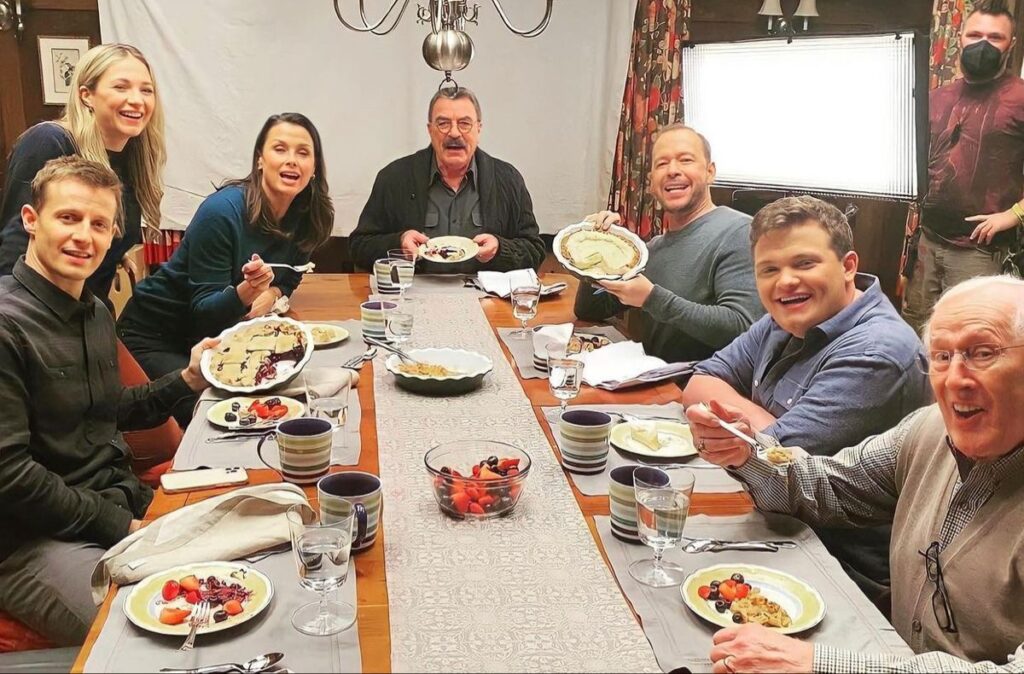 and his children Danny, Erin, and Jamie balance demanding careers in New York with the challenges and joys of maintaining close family bonds.
The series often highlights these relationships through collaborative moments, whether it’s Frank offering guidance to Jamie or Danny and Erin debating a criminal’s arrest. These interactions underscore the strength of the Reagan family, adding depth and emotional resonance to each episode.
The Heart of the Show: Reagan Family Dinners
Central to Blue Bloods are the Reagan family dinners. More than just mealtime, these gatherings serve as a narrative centerpiece, advancing plotlines while emphasizing unity, communication, and the value of family amidst life’s challenges.
Tom Selleck has repeatedly highlighted the importance of these dinner scenes, noting that they are pivotal for both character development and storytelling.
Family Life Isn’t Always Perfect
Blue Bloods doesn’t shy away from the messy, complex realities of family life. Speaking about the series’ twelfth season in an interview with Parade, Selleck stressed the significance of the Reagans’ disagreements during their dinners. Even Frank’s father contributes his own opinions, adding layers to the family dynamic and reflecting authentic familial interactions.
According to Selleck, these arguments are essential because they mirror real-world family complexities. They also allow the show to engage thoughtfully with societal issues surrounding policing and justice. While the Reagans share a deep connection to the NYPD, clashes with characters like Erin, Nicky, and Jamie prevent the narrative from becoming one-sided, instead creating a forum to explore nuanced perspectives.
In capturing both intimate family conflicts and broader social themes, Blue Bloods delivers storytelling that resonates on multiple levels, making its portrayal of the Reagan family an important contribution to television.