
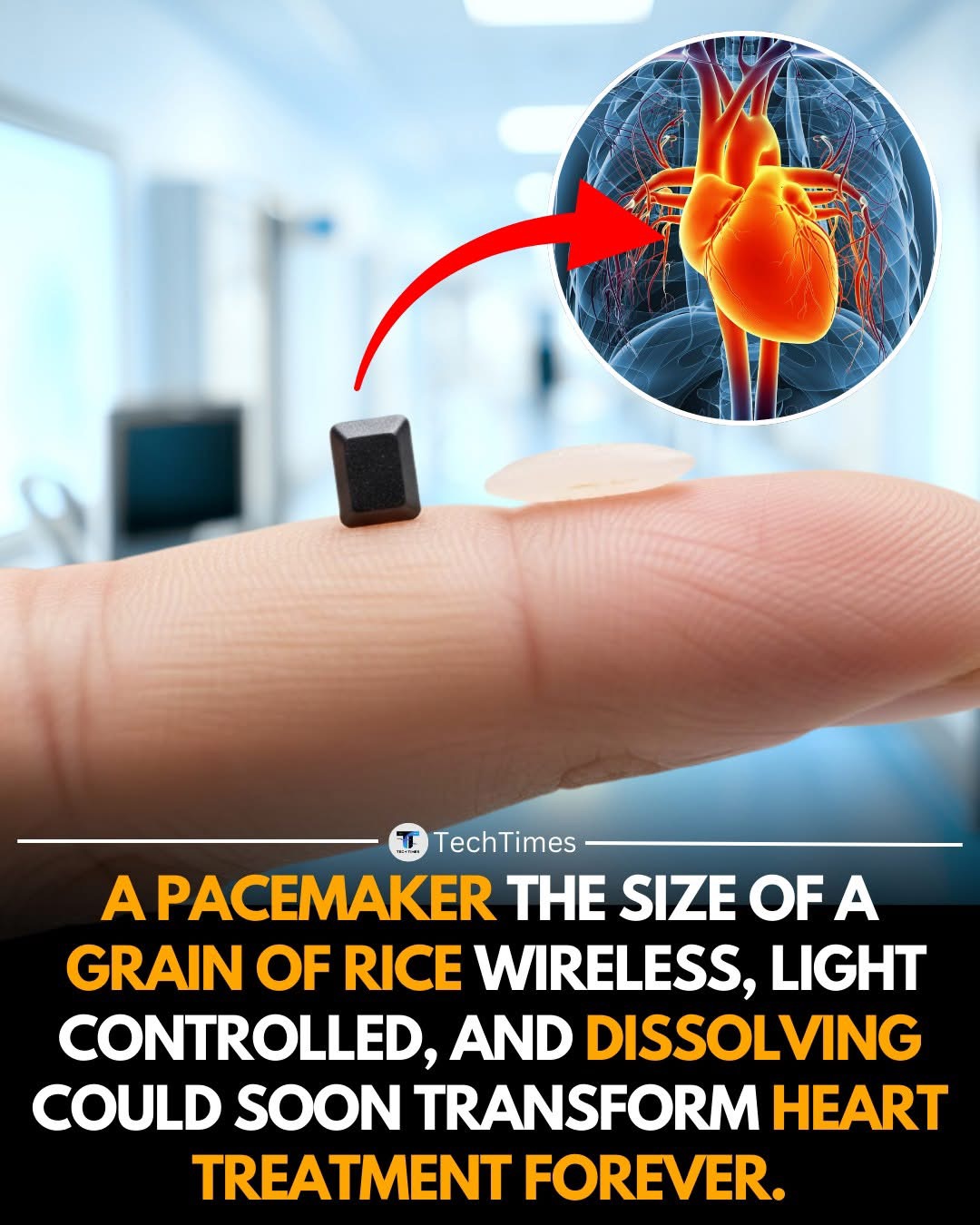
SCIENTISTS HAVE DEVELOPED A PACEMAKER THE SIZE OF A GRAIN OF RICE — WIRELESS, LIGHT-CONTROLLED, AND DESIGNED TO DISSOLVE AFTER USE. If successfully implemented in patients, this could dramatically change how temporary heart rhythm disorders are treated.
Traditional pacemakers require surgical implantation, wires, and in some cases later removal. This next-generation device is engineered to be minimally invasive and biodegradable. It can be activated wirelessly using light signals and then safely break down inside the body once it’s no longer needed. Early laboratory and animal studies suggest it may be particularly useful for newborns with congenital heart issues or adults recovering from cardiac surgery.
While the concept is revolutionary, human clinical trials will determine safety, durability, and long-term performance. If validated, this could represent a major leap in bioelectronics, where medical devices are not just smaller and smarter, but temporary and self-resolving.HEADLINES CLAIM CHINESE SCIENTISTS HAVE REVERSED BOTH TYPE 1 AND TYPE 2 DIABETES IN HUMANS USING A STEM CELL BREAKTHROUGH. If fully validated, that would be one of the most significant medical achievements in decades, given that hundreds of millions of people live with diabetes worldwide.
Stem cell research has long aimed to regenerate insulin-producing beta cells in the pancreas. In Type 1 diabetes, the immune system destroys these cells. In advanced Type 2 cases, they become dysfunctional. Early-stage clinical research in several countries has shown promising results where lab-grown or reprogrammed cells restore insulin production in select patients. However, reversing diabetes broadly requires long-term proof that blood sugar remains stable without ongoing insulin therapy and without severe side effects.
While early human trials can be groundbreaking, widespread medical acceptance depends on large-scale, peer-reviewed data and long-term follow-up. If this approach proves safe and durable, it could shift diabetes treatment from lifelong management to potential remission. Until then, cautious optimism is the responsible stance.