Television is a sprawling landscape dotted with cultural landmarks series that, for one reason or another, become part of our shared conversation. From The Sopranos and Breaking Bad to The Wire, certain shows dominate “greatest of all time” lists, even if many people have never watched an episode. It’s a familiar truth: personal taste doesn’t always follow the cultural current.
For years, Blue Bloods occupied a quieter but steady place in that landscape. It was never hailed as a prestige drama, nor did it inspire endless cycles of critical analysis, yet it built a dedicated audience that tuned in every Friday night across 14 seasons. In an industry where even promising shows rarely survive past season three, that kind of longevity is remarkable.
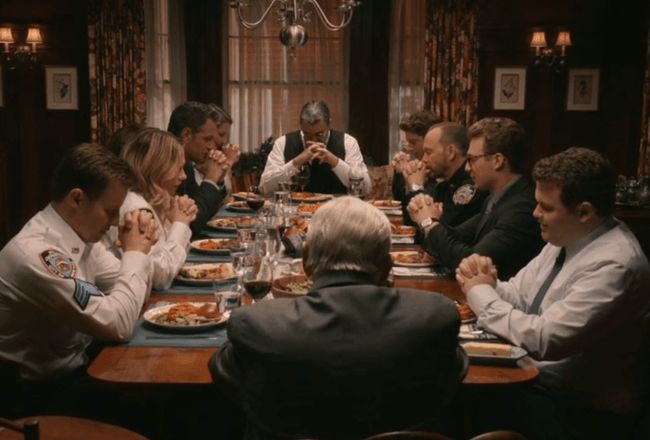 I always knew Blue Bloods was out there. Its promos aired constantly during other CBS staples, and I was well aware of its fiercely loyal fanbase. But nothing about it ever compelled me to start watching. Police procedurals have never been my preferred escape, and while I respect those who enjoy unraveling weekly mysteries, the genre simply wasn’t my storytelling comfort zone. Still, even from a distance, it was clear that Blue Bloods had deeper roots than the typical case-of-the-week format. It was grounded in family, a narrative element I’ve always appreciated in both found-family and blood-family stories.
Yet I let it pass me by. As the seasons accumulated, the idea of diving into a 14-year, 275-episode commitment felt impossible. It seemed like I had missed the window.
Then came fall 2025 and the arrival of Boston Blue.
From the first promo, the new series grabbed my attention in a way its predecessor never had. Led by Donnie Wahlberg and Sonequa Martin-Green, Boston Blue had an immediate spark. Wahlberg’s return to the universe that helped define his career was intriguing enough, but pairing him with Martin-Green an actor I’ve long admired made the show irresistible before the premiere even aired.
It also had a freshness that set it apart from traditional procedurals. The tone, the diversity of its cast, and its “fish-out-of-water” premise gave it a distinct identity. Wahlberg’s character leaving New York for Boston signaled that this wasn’t merely a continuation of Blue Bloods, but a series determined to stand on its own rather than echo the past.
The cast hooked me first; the relationships and storytelling kept me watching. At the heart of Boston Blue is the partnership between Danny and Lena an authentic, grounded bond that grows quickly but naturally. Their dynamic serves as the emotional core of the series, elevating it far beyond standard procedural rhythms.
Family, too, plays an important role. When well-executed, family-centered narratives can be comforting, resonant, and deeply engaging without tipping into melodrama. Boston Blue strikes that balance with surprising finesse for such a young show. Not everything is perfect the dynamic between Jonah and Season is still developing but the series already has more strengths than weaknesses, and its early momentum suggests it will only sharpen its identity with time.
Somewhere along the way, a surprising question took shape: Had I missed out on Blue Bloods?
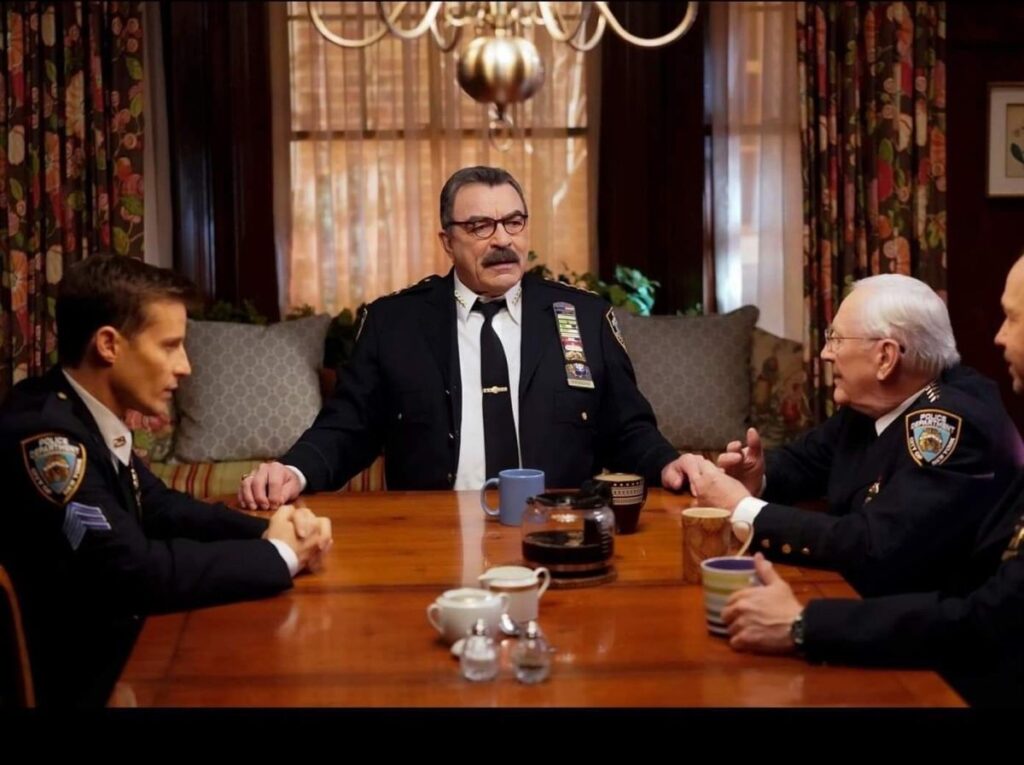 Although I never watched the original series, I’ve heard enough through the years to understand its appeal. The iconic Reagan family dinners, the long-term emotional investment, and the character continuity across more than a decade are all hallmarks of a show with lasting resonance. If Blue Bloods offered the same character-centered storytelling that makes Boston Blue so compelling, maybe it was more aligned with my tastes than I once believed.
I’ve always gravitated toward procedurals where the characters matter as much or more than the cases. In that sense, Boston Blue has revealed something unexpected: perhaps Blue Bloods, had I given it a chance, might have provided exactly the blend of emotional depth, familial loyalty, and personal growth I appreciate in long-form drama.
Of course, tackling a 14-season series is still daunting. The sheer volume of episodes is intimidating. But the more I watch Boston Blue, the more I understand the universe from which it emerged. There is a thematic throughline a shared emotional DNA that connects these two series. And that connection is strong enough that, for the first time, I’m genuinely considering starting Blue Bloods from the beginning.
That speaks not only to Boston Blue’s early success, but also to the enduring impact of the Blue Bloods universe. In an era when reboots and spinoffs often feel unnecessary or uninspired, Boston Blue has managed to craft something fresh while honoring the spirit of the original. It proves that a continuation can thrive not by replicating what came before, but by reimagining it with new voices, new dynamics, and new emotional textures.
In the end, Boston Blue hasn’t just earned its place in the modern TV lineup it has also revitalized interest in the legacy of Blue Bloods. For someone like me, who once stood completely outside the fandom, that’s no small feat. And perhaps, after all these years, it’s finally time to pull up a seat at the Reagan family dinner table.