For more than a decade, Blue Bloods has remained one of CBS’s most enduring dramas, weaving together the intensity of police work with the emotional complexity of family life. The series has become a prime 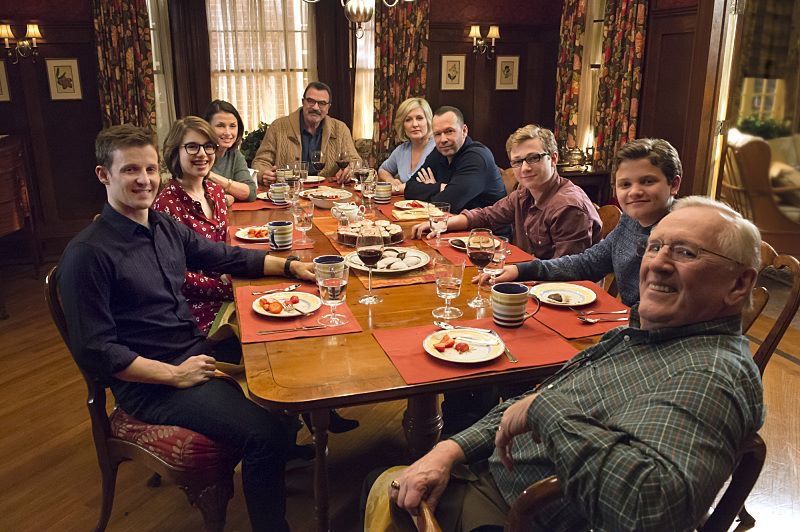 time institution not only for its compelling investigations, but for the rich dynamics within the Reagan clan, anchored by Tom Selleck’s steady leadership as Commissioner Frank Reagan. But behind the polished weekly episodes and seamless on-screen chemistry lies a disciplined, tightly run production shaped by a strict set of rules designed to protect the story, the cast, and the long term legacy of the franchise.
Continuity is the lifeblood of an ensemble drama, but on Blue Bloods, it functions as more than a creative priority it’s a contractual standard. One of the most sobering rules the cast must accept is that no role is guaranteed. The show is built on the understanding that any character, no matter how beloved or long-standing, can be written out at any moment. This isn’t meant as a critique of performance; it’s a storytelling safeguard. Sudden departures whether through transfer, resignation, or tragedy keep the show unpredictable and emotionally charged, preventing the narrative from ever feeling stagnant. It reinforces the core philosophy that the series itself always comes first.
Because of this, cast members are expected to treat every episode as if it could be their last. Staying sharp, fully committed, and emotionally present is non-negotiable. When a character leaves, it is handled strictly as a creative decision, never a personal one another reflection of the production’s laser focus on narrative integrity.
To preserve its mysteries and high-stakes drama, the show also enforces rigorous confidentiality. With millions of fans worldwide, spoilers are treated as a serious threat. Not only are actors prohibited from revealing plot details, but they often aren’t given the full picture themselves. For episodes involving major twists, performers may receive redacted or partial scripts. Key motivations, lines, or resolutions might be withheld until the moment of filming. This secrecy has an unexpected advantage: actors’ reactions to shocking story developments are sometimes genuinely spontaneous, adding depth and authenticity on screen.
Publicity is equally controlled. Cast members are trained to navigate interviews with careful precision offering anecdotes, discussing larger themes, or expressing enthusiasm without giving away a single narrative thread. The show’s plotlines are treated with the same level of protection as classified information.
While many dramas encourage improvisation, Blue Bloods operates under a far stricter hierarchy. Every word, pause, and emotional beat is intentionally crafted. Deviating from scripted dialogue is strongly discouraged. With a universe as layered as the Reagans spanning complex cases, political tensions, and long running character arcs one improvised line can create continuity issues seasons down the road. A throwaway remark in season five might become essential emotional groundwork in season nine. The writers’ months of meticulous planning depend on the cast delivering each scene exactly as designed.
These disciplined rules help explain why Blue Bloods has thrived for so long. Beyond gripping cases and heartfelt moments, the series is held together by a behind the scenes structure that protects its tone, performance quality, and internal consistency. For the Reagans, the badge symbolizes duty, sacrifice, and accountability and that philosophy is mirrored throughout the production. Maintaining secrecy, precision, and continuity isn’t just a guideline; it’s a shared responsibility.
As the franchise continues to evolve, one truth remains: Blue Bloods succeeds not only because of its compelling stories, but because its cast and creators work within a carefully preserved world where excellence is the rule, not the exception.