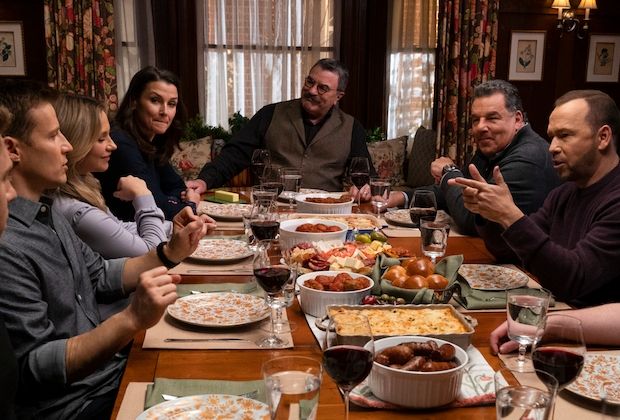
The Reagan family dinners were always the true heart of Blue Bloods, functioning as far more than a familiar closing tradition. Gathered around that long dining table, the series revealed its soul. While police work, courtroom drama, and political pressure drove the plot forward, it was these dinners that gave the show its emotional weight and moral center.
Their power lay in their simplicity. There were no sirens, no interrogations, no breaking news just family members sitting together, passing plates, and talking. Yet within those quiet conversations, Blue Bloods explored its most complex ideas. Questions of justice, loyalty, faith, and authority unfolded not in precincts or courtrooms, but over roast beef and mashed potatoes. The format allowed opposing viewpoints to coexist without turning anyone into a villain, reminding viewers that deep moral disagreements can live comfortably alongside love and respect.
At the head of the table sat Frank Reagan, whose dual role as police commissioner and father embodied the show’s central tension. He wasn’t simply giving orders he was listening as his children challenged him. Danny brought raw emotion and street-level urgency, Erin offered legal restraint and nuance, and Jamie represented idealism repeatedly tested by reality. Together, their differing perspectives turned each dinner into a quiet courtroom, one where empathy mattered as much as being right and no verdict was ever final.
These scenes also humanized the Reagans in a way few procedural dramas manage. After spending the episode in uniform, viewers saw them laugh, tease, argue, and occasionally lose patience with one another just like any real family. Those moments made the characters feel lived-in rather than scripted, reminding the audience that behind every badge and title was someone carrying the weight of their choices home at night.
Over time, the Reagan dinners became a ritual not only for the family, but for the audience as well. Fans came to expect them, to savor that final moment when the chaos of the episode gave way to reflection. Even as the family evolved and endured loss, the table remained a symbol of continuity in a world shaped by uncertainty and sacrifice.
More than any case or long-running storyline, the Reagan family dinners explain why Blue Bloods endured. They grounded the series in values without preaching, offered reflection without easy answers, and showed that the hardest questions are often best faced together. In the end, those dinners weren’t just a tradition within the show they were its emotional anchor, and the reason the Reagan family came to feel like one of television’s most genuine and enduring families.