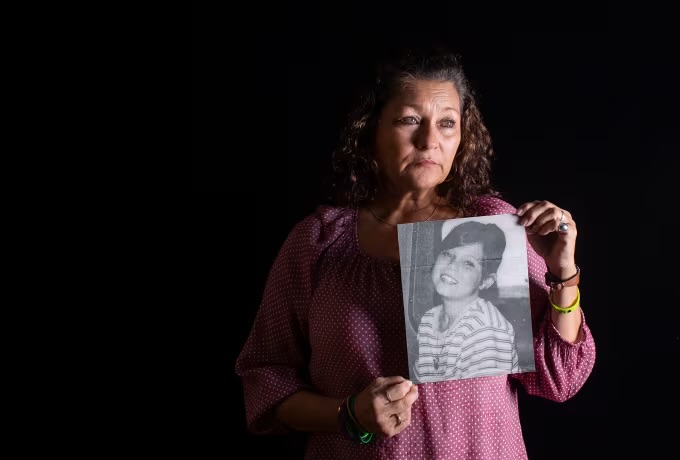
For the first time in 25 years, Jonnie Carter woke up on March 4 – the anniversary of her daughter Bethany Markowski’s disappearance – feeling angry.
The anger flared so bright and hot that for a moment, Carter said she struggled to trace its source. Maybe it was the fact that she never thought she’d reach this milestone. Or simply anger that any parent would have to suffer the agony of having a missing child.
Or maybe, she said, it was her body’s way of acknowledging the possibility that after more than two decades, Bethany might not come home.
“I was so mad – crying, angry mad – that we even have to have a Missing Children’s Day, that we even have to talk about this,” Carter said of the Tennessee state holiday she helped establish in Bethany’s honor.
But eventually, the anger ebbed; replaced by an all-too-familiar ache of grief laced with longing. The 25th anniversary of the day Bethany vanished comes as the world has been riveted by another unexplained disappearance: the kidnapping of Nancy Guthrie.
The search for the missing 84-year-old is heading into its third month without outward signs that investigators are any closer to finding her.
Carter said her heart breaks for the Guthrie family – and for the thousands of families whose stories never make the national headlines – because she knows what it’s like to wake up each day desperate for clarity that may never come.
Dr. Pauline Boss – a pioneering family therapist who has spent nearly 50 yearscounseling families whose loved ones are missing – coined a name for the specific kind of anguish felt by those left behind: “ambiguous loss.”
The families of the missing have to learn “to hold two opposing views in (their) mind, sometimes forever,” Boss told CNN.
“She may still be alive; and maybe not. She may be coming home; and maybe not,” Boss said.
“(It’s) the stress of living with questions that have no answers. The stress of living with ambiguity. … It’s a different kind of pain.”
Be First to Comment